The Regulatory Landscape in Canada
Unlike some jurisdictions where rainwater harvesting has been explicitly prohibited or mandated, most Canadian provinces operate in a grey zone: rainwater collection for outdoor non-potable use (garden irrigation, vehicle washing) is generally permitted without formal approval, while indoor use — particularly for toilet flushing or any potable application — typically triggers building code and health code requirements.
The 2010 updates to the National Plumbing Code of Canada (NPC) introduced a framework for rainwater harvesting systems used for non-potable purposes. Provinces that have adopted the NPC or harmonised their building codes to it generally follow this framework, though local amendments are common.
Note on information currency: Regulations change. The information below reflects publicly available documents as of early 2026. Before installing any rainwater collection system for indoor use, contact your provincial environment ministry and local building department for current requirements.
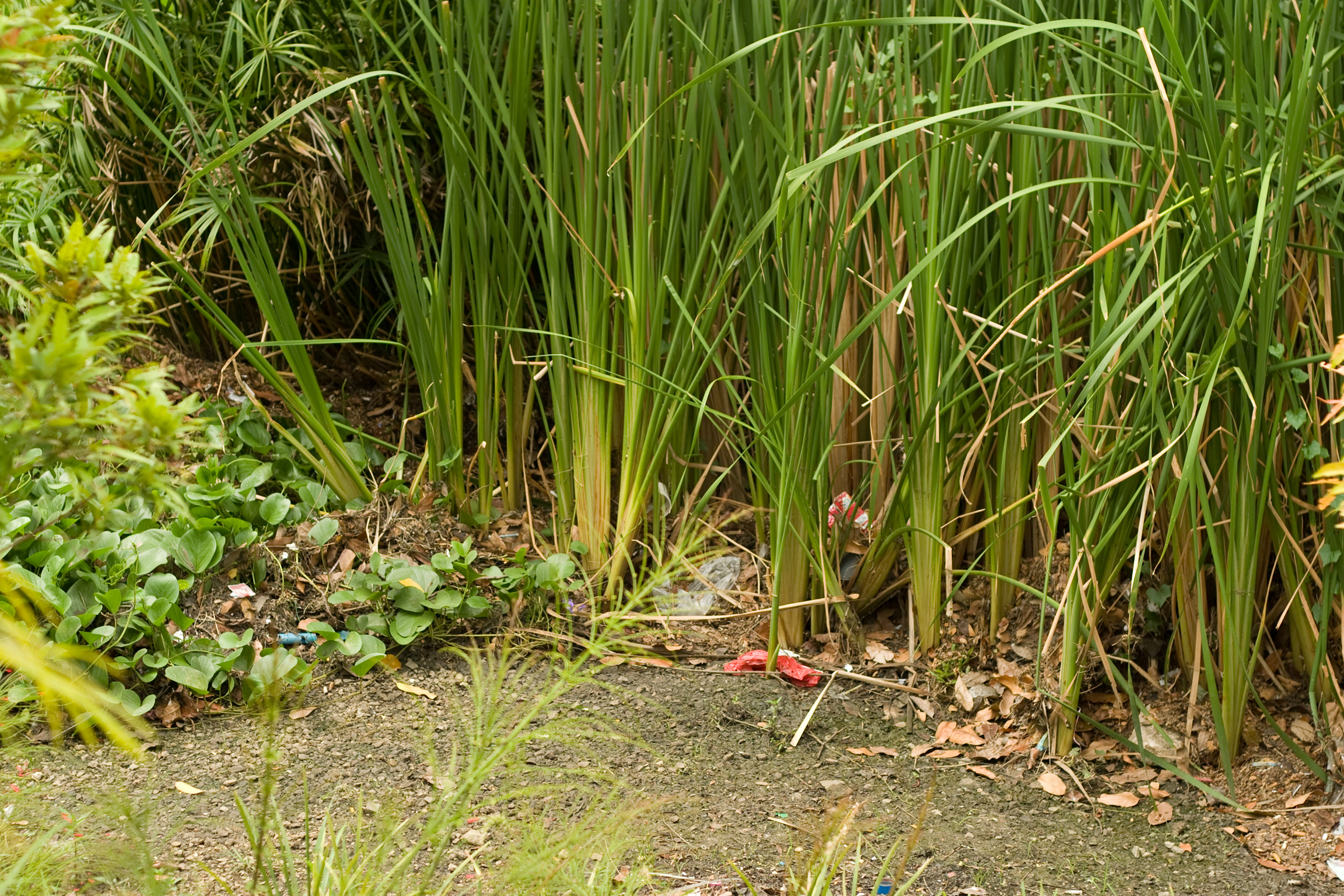
A rain garden in a residential setting, used to manage stormwater runoff. Source: Wikimedia Commons (CC)
British Columbia
British Columbia has one of the more developed regulatory frameworks for rainwater use in Canada. The province's Water Sustainability Act (2016) consolidated previous water licensing provisions. Under this Act, collecting precipitation that has not yet reached a natural watercourse (i.e., roof runoff) does not require a water licence. This is a meaningful distinction: it means most residential rainwater collection from rooftops is unrestricted in terms of water rights.
However, if the collected water is to be used indoors for toilet flushing or other non-potable plumbing applications, the BC Plumbing Code (aligned with the NPC) applies. This requires a rainwater harvesting system to be designed to specific standards, including separation of the rainwater distribution lines from potable supply lines, clear labelling, and often a building permit.
The BC Ministry of Water, Land and Resource Stewardship has published guidance documents for both residential and larger-scale collection, available through their online portal.
Alberta
Alberta does not require a water licence for collecting rainwater from rooftops for personal use. The Water Act (RSA 2000) exempts household use from most licensing provisions, and rooftop collection for irrigation is broadly practiced without formal approval in both rural and urban settings.
For indoor non-potable use, the Alberta Building Code (ABC) and the Safety Codes Act govern installation. A building permit is generally required for any plumbing modification that connects a rainwater system to indoor fixtures. The permit process includes an inspection by a licensed safety codes officer.
Some Alberta municipalities have offered rain barrel rebate programs in the past. The City of Edmonton ran such a program through its drainage services department, though program availability changes annually based on municipal budget allocations.
Ontario
Ontario's regulatory framework for rainwater is split across several instruments. The Ontario Water Resources Act governs taking water from natural sources; rooftop rainwater collection is generally outside its scope. The Ontario Building Code (OBC), last comprehensively updated in 2012 with subsequent amendments, includes provisions for rainwater harvesting systems used for non-potable indoor purposes.
In Ontario, a system that connects collected rainwater to plumbing for toilet flushing requires a building permit and must meet OBC Part 7 (Plumbing) requirements. The system must include a dedicated non-potable water header, blue-coded piping (to distinguish from potable supply), backflow prevention, and an approved filtration system.
Several Ontario municipalities have published detailed guides. The Region of Peel and the City of Toronto have both produced documentation specifically for homeowners, including step-by-step permit application guidance.
Quebec
Quebec's water management framework is anchored in the Loi sur la qualité de l'environnement (LQE) and the Règlement sur la qualité de l'eau potable. For outdoor non-potable use, rooftop rainwater collection is generally unregulated at the provincial level. Indoor non-potable applications fall under the Québec Plumbing Code.
Municipalities in Quebec retain significant authority over stormwater and local water management. The Communauté métropolitaine de Montréal (CMM) has published studies on urban water management that acknowledge rooftop collection as a stormwater reduction tool, though explicit municipal rebate programs have been less common than in some other provinces.
Manitoba, Saskatchewan, and the Prairie Provinces
The Prairie provinces are characterised by highly variable precipitation — wet springs and dry summers in many regions. Agricultural rainwater collection has a long history here, particularly cisterns for farmstead use.
Manitoba's Water Rights Act grants rights to collect and use precipitation falling on private land without a licence for domestic purposes. Saskatchewan has similar provisions under its Water Security Agency Act. Both provinces require permits for systems that access groundwater or divert surface watercourses, but rooftop collection is explicitly or implicitly exempt.
Building permit requirements for indoor use mirror the NPC framework. Rural municipalities in both provinces have less stringent inspection regimes than urban centres, though this varies significantly by municipality.
Atlantic Provinces
Nova Scotia, New Brunswick, Prince Edward Island, and Newfoundland and Labrador each administer their own water and environment legislation. The Atlantic provinces generally permit rooftop collection for outdoor use without permits. Indoor use is subject to provincial building codes, all of which are broadly aligned with the NPC.
PEI's Environmental Protection Act and Nova Scotia's Environment Act both address water diversion, but the volumes involved in residential rooftop collection fall well below thresholds that trigger review requirements.
Nova Scotia has been noted for relatively progressive water governance, including guidance on rural cistern installation published by Nova Scotia Environment (now part of the Department of Environment and Climate Change).
Territories: Yukon, Northwest Territories, Nunavut
The territories face distinct challenges around water: remote communities, permafrost, and extreme winters. Rainwater collection, while practiced, is less common than cistern-based systems using trucked or pumped water. The Yukon's Waters Act and the Northwest Territories' Waters Act (which applies also to Nunavut for certain matters pending devolution) regulate water use at a scale above typical household collection.
Practical implementation in the territories often involves working directly with Indigenous community governments and territorial departments, where formal building code enforcement may differ from southern urban contexts.
Municipal Permit Requirements: What to Expect
| Use Case | Permit Typically Required? | Applicable Code |
|---|---|---|
| Garden irrigation (above-ground barrel) | No | None in most provinces |
| Vehicle washing (above-ground tank) | No | None in most provinces |
| Toilet flushing (indoor plumbing connection) | Yes | Provincial Building Code / NPC |
| Laundry (non-potable indoor use) | Yes | Provincial Building Code / NPC |
| Potable use (drinking, food prep) | Yes + health approval | Provincial Building Code + Health Code |
| Agricultural irrigation (farm use) | Varies by volume and province | Provincial Water Act |
Key Contacts for Regulatory Guidance
- BC: Ministry of Water, Land and Resource Stewardship — gov.bc.ca
- Alberta: Alberta Environment and Protected Areas — alberta.ca
- Ontario: Ministry of the Environment, Conservation and Parks — ontario.ca
- National: National Research Council — NPC updates — nrc.canada.ca